Engineers need a beginner's mindset for the new AI stack

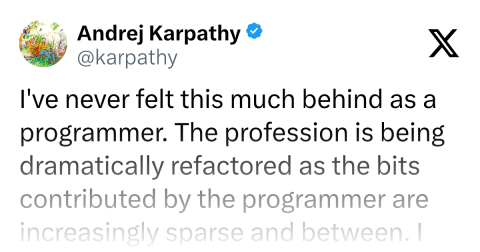
Great post by Karpathy. As a programmer, I feel like a whole new way of thinking was unveiled and I am not able to optimally use these new tools yet.
I recommend all engineers - whether you are a junior or senior, to adopt a beginner's mindset and put in the 10000 hours needed to master this new stack.
- Coding agents
Keep reading
Newer: Kobe Bryant on resting at the end, not in the middleCustomers and partnersAI agents
Trying early versions of Entelligence.AI's Ellie at Plank
Has been fun to try early versions of Ellie here at Plank, it’s addictive! Also we enjoyed contributing towards building this. Has been great partnering with Aiswarya Sankar and the Entelligence.AI team
Software architecture
Supabase with row level security for multi-tenant AI apps
Supabase is my go-to for fast AI prototypes: Auth + Postgres + Storage in minutes. For multi-tenant apps, use Row Level Security (RLS): add tenant_id, set it from JWT claims, and enforce policies so every query only sees its tenant.
Plank
Plank AI Accelerator launches for early-career engineers
I am excited to announce the launch of the Plank AI Accelerator - a fully-paid, 1-year intensive program for ambitious early-career engineers who are ready to go all in on AI and the future of programming. AI is fundamentally transforming software development. There is a rapidly growing gap between engineers who leapfrog their abilities using AI and those who don’t. And we aren’t just talking about using codegen and copilots for increased productivity - those are table-stakes at this point. The real opportunity to level-up is in building new types of AI-native features and apps using LLMs (think swarm agent pipelines, voice agents, LORA adapters, on-device models). That’s why Privahini Bradoo and I created the Plank AI Accelerator - to turbo-charge engineers with advanced AI tools and give them hands-on experience in building the next generation of AI applications. Applications are now open for our first cohort in Belo Horizonte, Brazil. Spots are limited - learn more and apply here: www.joinplank.com/ai. Let’s build the future together!

Coding agents
Cursor 0.43 ships agents while GitHub Copilot loses steam
Cursor releases agents within the IDE with their 0.43 release. GitHub had a huge advantage and was moving very fast up until last year's Github Universe. Seems to have totally lost steam since then. - The recent release of PR summaries in Github.com is very poor quality. The summaries have long links to random files in the PR inserted in the response markdown, in addition to just being incomplete and inaccurate - Still no full-repo context in CoPilot - The idea behind VSCode apps was great. It was announced last year - still not released - "Generate unit tests for this PR" feature still not live Microsoft you started from pole position but are now getting lapped!
Models and research
ChatGPT search beats Google on an Android coding question
I asked ChatGPT and Google "for an android app I want to move some computation to a background process so it keeps running while the app is in low power mode or the screen is sleep. How to do this?" ChatGPT search result had a much cleaner UI and a precise answer vs Google. chatgpt.com/share/67413de1-c714-8002-9916-719a0c711… google.com/search
Software architecture
Why Plank recommends Hex for data analysis and visualization
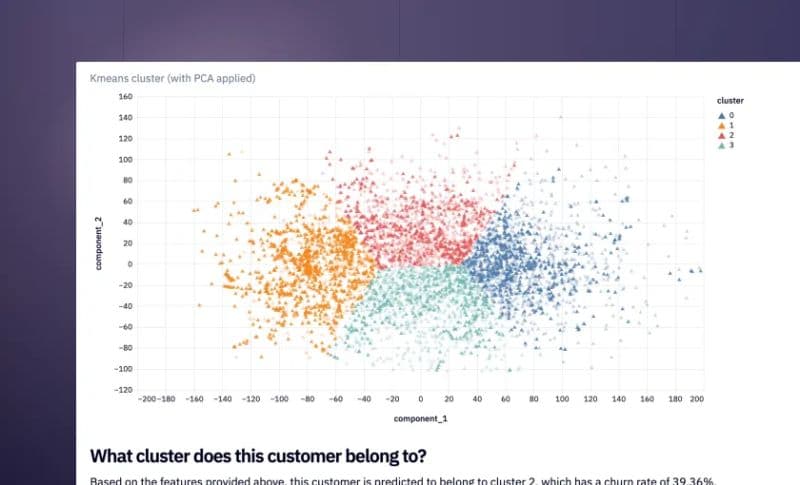
Highly recommend Hex for data analysis and visualization. Benefits over other similar technologies: - great integration support with most databases as well as platforms like Snowflake, BigQuery etc. - hosted solution so don't have to worry about scaling - you get the benefit of on-demand / lambda type functionality out of the box - python notebooks on the cloud / native SQL support - ability to integrate the generated graphs natively inside user-facing applications We have had success building complex data integrations and visualizations in as little as 1 day with a tech stack combining Hex and DBT.
Models and research
LLMs learn by compression, as Ilya Sutskever argues
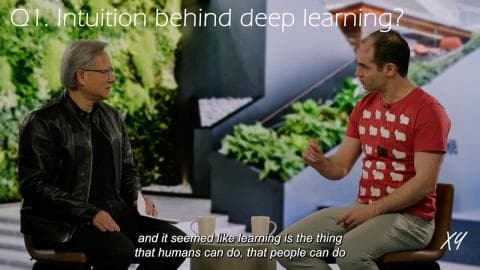
I love this video re: LLMs. Its all about compression! The text on the internet is a mapping / representation of all human knowledge. If you compress that, you force structure and the system learns something about the underlying "processes" that produced the text. A simple example is if you compress a bunch of math tables (that have examples of addition/multiplication/division etc etc), the most efficient compression of that data is a calculator function! This should also help people understand that these models are not just statistical prediction machines but truly are able to reverse engineer how things work and hence able to "compose" this understanding to derive "new insights". Once I heard Ilya Sutskever's argument re: compression, it seemed obvious to me in hindsight...wish I had come up with this in 2012 times :) Its also an example of compounding - people who had internalized this early just had a large head start on everyone else. There is a lot of power in relentless pursuit of the most simple yet non-obvious ideas. youtu.be/GI4Tpi48DlA
Software architecture
LlamaIndex dynamic section retrieval improves RAG results
Good work @llamaindex - this approach solves some key problems with RAG around: - retrieving entire contiguous sections vs fragmented chunks - attaching metadata to sections and being able to use that metadata in retrieval We are already seeing improved results (and a simpler codebase) in a few use cases here at Plank