The SaaS business model is unraveling in enterprise HR

At Plank, we are seeing first hand the unraveling of the SaaS business model. Large F500 as well as mid-market customers are coming to us to move away from expensive SaaS HR solutions that are rigid, built in a pre-AI world and very slow to work with for changes.
In our experience, we are able to build completely custom solutions that are deployed in customer's cloud, with fully local and private LLM under the hood and with full IP owned by them; all in a matter of weeks. So they are comparing solutions that are 8-figure annual costs with a multi-year implementation with just a 6-week implementation and very low one-time implementation costs with close to zero on-going maintenance costs.
Also the solution is built in an AI-native way using the latest approaches. Since these techniques were just developed in the last 6-months, existing incumbents simply are not architected in this way.
- Enterprise AI
- Plank
Keep reading
Newer: Why Plank relies on humans for system designCoding agentsModels and research
A 3-layer model architecture for agentic coding workloads
In our experiments, we found that using open source models like Qwen or Deepseek via OpenRouter looks temping and cheap on a per call or $/tokens. However, if you run a real benchmark with your pull requests, these models end up taking more rounds before they converge when running agentic workloads. The way to go is to deploy your own open source models. The architecture we go with is a 3-layer one. The 1st layer is local models running on developer machine, the 2nd layer is open source models deployed in our own cloud servers and the 3rd layer is the latest models offered by the labs. We also are able to distribute the workload based on the type - eq a pull request review can run on a slower machine as its not sync.
Customers and partnersAI agents
Composio for building AI agent platforms with integrations
We found Composio to be super useful for building AI agent platforms that needed integrations here at Plank . Also it has been fun to help contribute towards building the Composio platform.
Software architecture
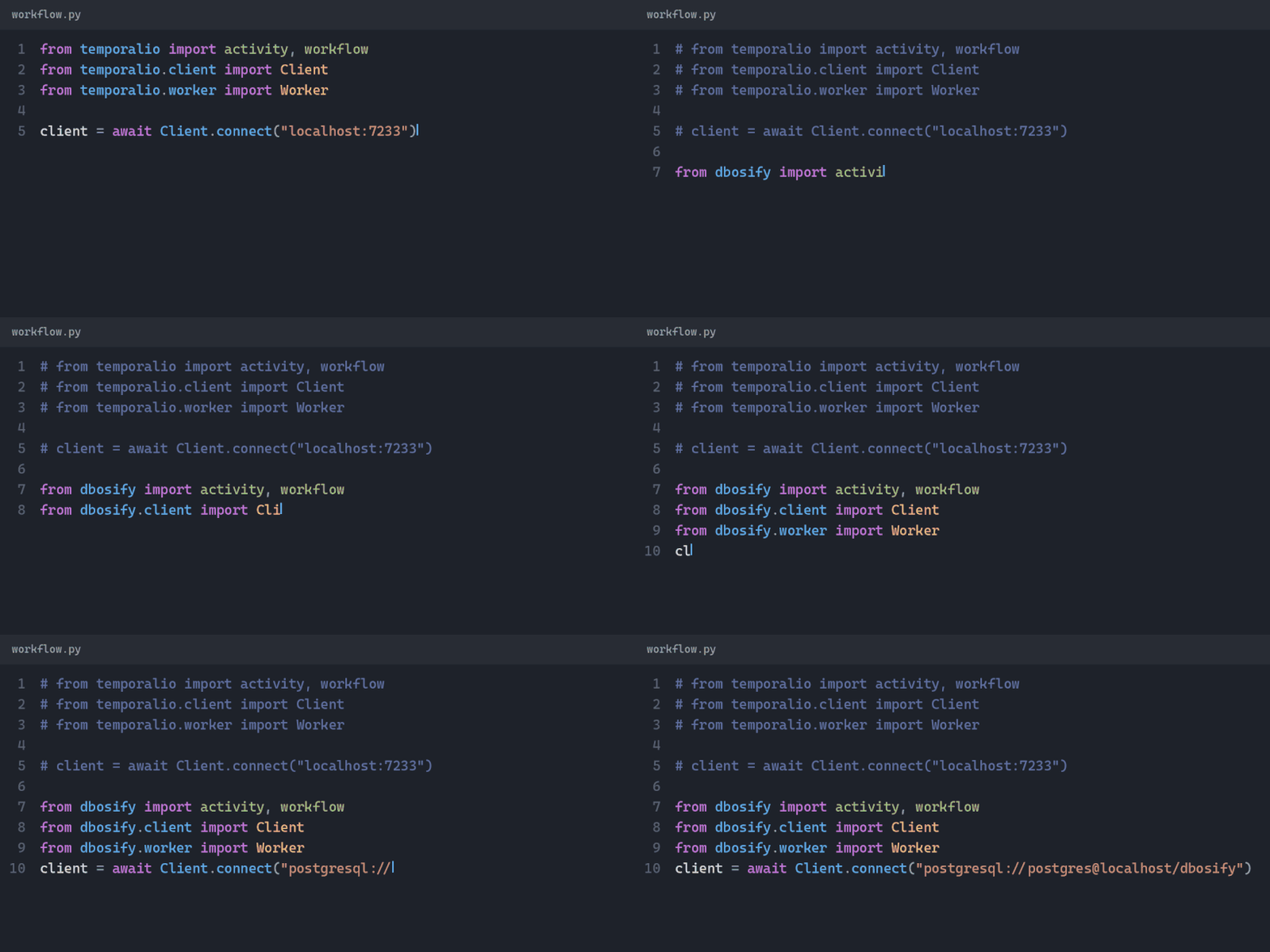
DBOSify replaces Temporal Python with plain Postgres
Really cool work from Peter Kraft and Qian Li, PhD - DBOSify is a drop-in replacement for Temporal Python that uses Postgres instead of a Temporal server. This lets you run durable workflows, activities, signals, updates, retries, and recovery without needing any infrastructure except Postgres. The other project that took a similar approach was Absurd (github.com/earendil-works/absurd). Excited to try DBosify, hoping there's a Typescript version soon as well. DBOSify GitHub: github.com/dbos-inc/dbosify-py
PlankForward deployed engineering
Join Plank to work on forward deployed AI engineering
Join us at Plank, if you want to work on the most interesting challenges in forward deployed AI engineering and research!
Coding agents
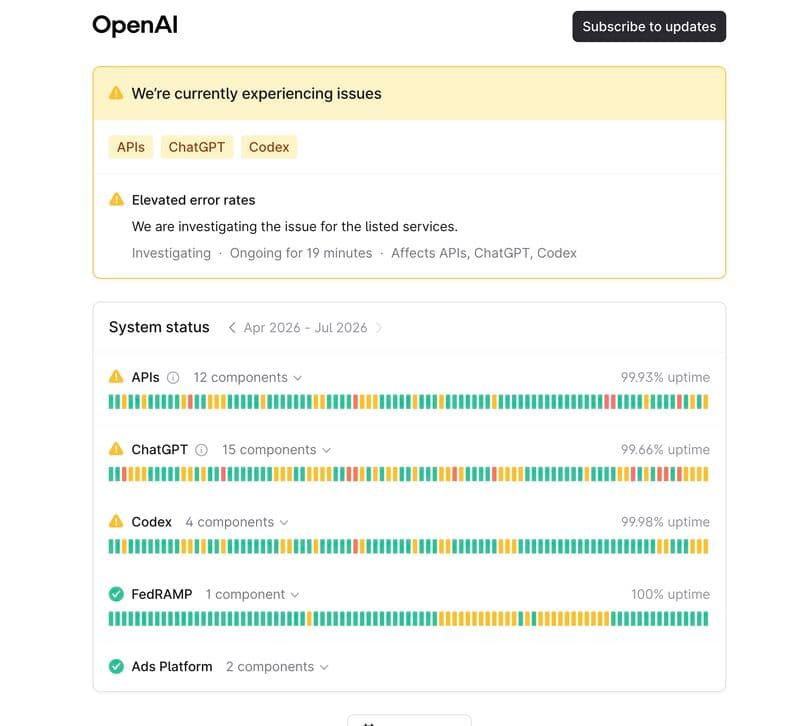
When Codex has an outage during a 2am coding flow
When you are in a nice flow coding on Friday 2am but Codex has an outage....anyone else in same shoes?
Plank
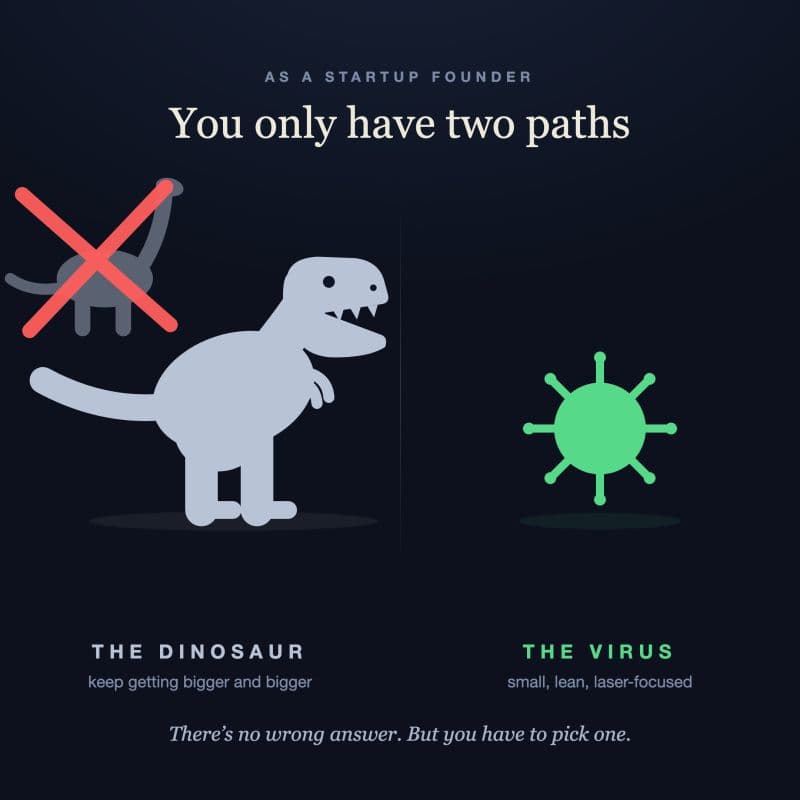
Drew Fitzsimmons asks for a T-Rex, not a sauropod
My favorite feedback on my dinosaur vs virus post was from my CoS Drew Fitzsimmons, who reads the post and then with contained exasperation says - “If you’re going to use the analogy of a dinosaur as an apex predator, couldn’t you at least use an image of a T-Rex rather than a sauropod??!!” 😂 So this one is for you, Drew! Founders must pick between being a virus or a dinosaur
Customers and partners
Congrats to Cheiron on its $8M seed led by Menlo Ventures
Big congrats to my friend Harshit Gupta on a successful raise! Harshit and the Cheiron team are doing something really special here! It was a privilege for Plank to build and learn with them. Excited to see Cheiron change the drug development industry with their platform. Congrats guys!
Plank
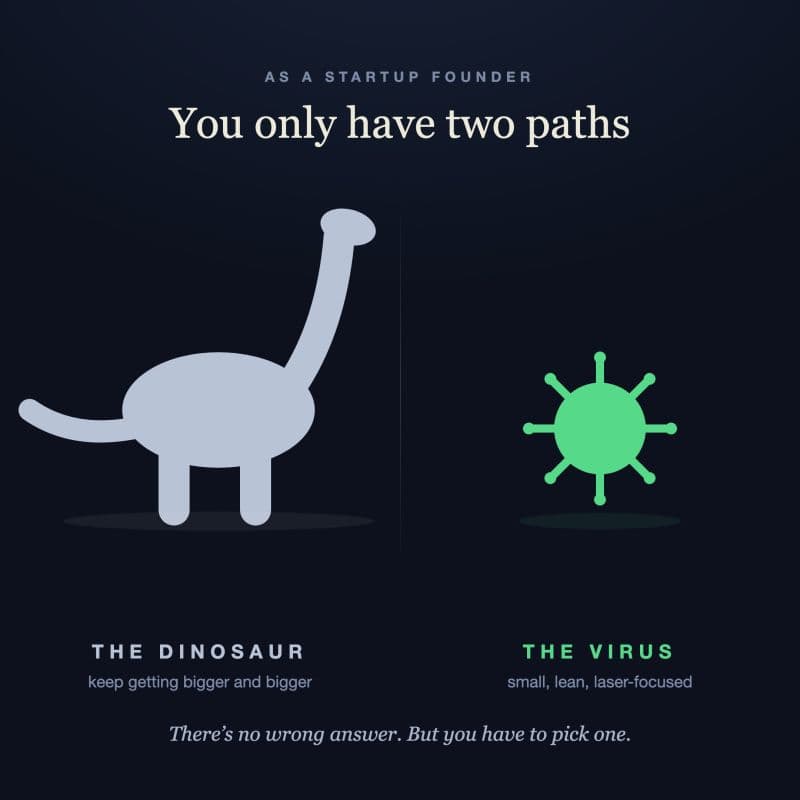
Founders must pick between being a virus or a dinosaur
As a startup founder, you only have two paths. Be a virus or be a dinosaur - both are apex predators in nature. Path 1: Be a dinosaur. Your goal is to keep getting bigger and bigger. The idea is simple - you can keep upselling more things to your existing customers. Companies like Salesforce have executed this strategy well. Path 2: Be a virus. You stay laser-focused on a single product or line of business, and you keep your org and core team extremely small and lean. Cursor and Instagram are examples - both built massive businesses with tiny teams. There's no wrong answer. But you have to pick one.