Plank x SignalFire AI CTO show and tell with 15 CTOs

We recently ran a super fun Plank x SignalFire AI CTO Show & Tell session with 15 CTOs from fast-growing AI startups. I screen-shared my dev setup/harness for running 50 concurrent agents and Austin Wang shared how he burns 20 billion tokens/day building cmux! Link to my detailed session notes + artifacts in comments.
Also, if you’re interested in joining one of our upcoming Plank AI CTO roundtable sessions, DM me!
- Coding agents
- Plank
Keep reading
Newer: OpenAI models disprove the Exponential Time HypothesisModels and researchEnterprise AI
Reflection ships the first US-created open source model
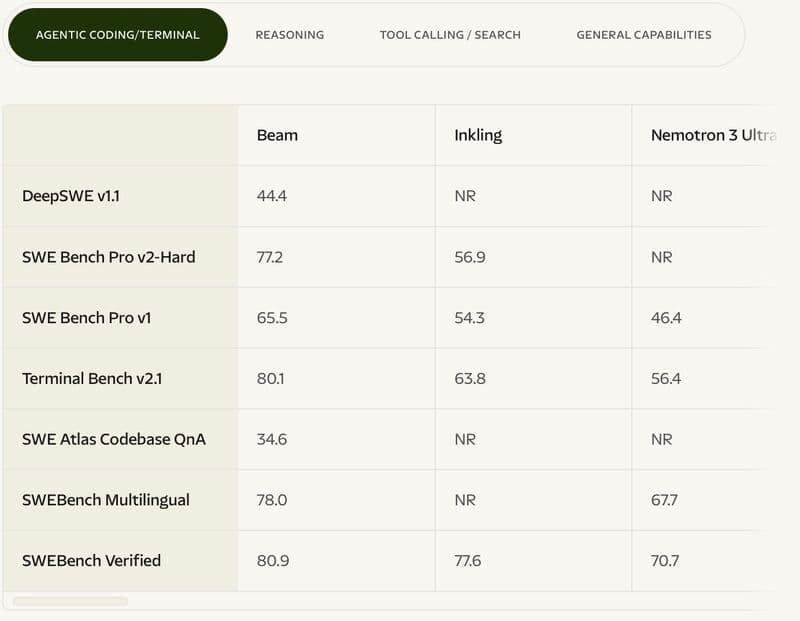
First US created open source model is out! Yay Reflection. This should alleviate enterprise concerns re: foreign models and further clear the path to open source model deployment in enterprise. reflection.ai/blog/introducing-beam
AI agents
The interface will decide the AI personal assistant race
It's an interesting time with people experimenting with the UI of human-computer interaction with the advent of AI. The Fo AI personal agent from Shivani Poddar and Wajo AI is using phone calls and audio as the primary interface - an interesting design choice they have is to give the agent it's own identity vs masquerading as the user. Muse from Meta is taking an approach to be text-chat first - I imagine they will want this to live inside WhatsApp and Instagram chats and comments in the future. Dots from OpenAI is going down the super app approach - living as a tab within the ChatGPT interface. And then you have interfaces that are pushing the boundary like alterego from Arnav Kapur which has a POC of a non-invasive brain wave reading device. I believe that having the right interface will be the key to succeed in building the AI-native personal digital assistant. No-one has figured this out, so the game is still on!
Coding agents
IIT Delhi makes core computer science courses optional
Made me quite sad that Indian Institute of Technology, Delhi has made the fundamental Computer Science courses optional in the CS program!!! Courses of Artificial Intelligence, Compiler Design, Theory of Computation, Logic and Hardware Design have ALL been made optional. For me, these amazing courses were instrumental in developing mental models, tools, problem-solving approaches that I found to be invaluable in personal and professional life, much beyond just as computer science tools. Specially in an era where basic software engineering and programming will be done by AI, the value of knowing these core fundamentals is even more critical. Even though some of these were difficult courses, I simply loved learning about these - it's what made me fall in love with this awesome field!
Forward deployed engineeringEnterprise AI
The enterprise AI diffusion gap is about human expertise
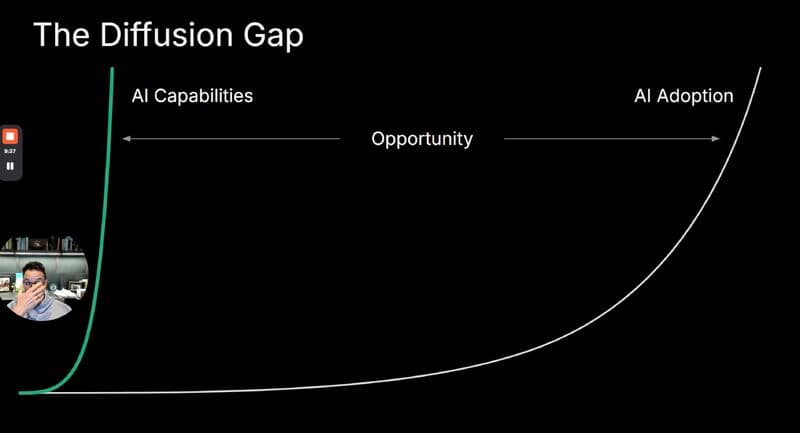
The diffusion gap Pat from Sequoia is talking about is real! Model capabilities are already sufficiently advanced for most enterprise use cases. The gap is the human expertise to interface with the humans on the other side. This requires a new type of organization to deliver this capability, totally new types of skills and roles, and a new type of software delivery process. It has been exciting to think about all this here at Plank and work closely with our customers to close this diffusion gap for them. Listen to Pat's notes: loom.com/share/c016702964a04dfba40e1777cf5f053a
Models and research
Missing discrete math and the pigeonhole principle
I miss Discrete Math - it was a subject that invoked an emotional feeling of symmetry, that everything is in it's place and fits. One obvious, yet beautiful and powerful theorem was the PigeonHole Principle. It states that if n items are put into m containers, with n > m, then at least one container must contain more than one item. While it's obvious, it can be used to demonstrate some unexpected results...Eg, given that the population of London is more than one unit greater than the maximum number of hairs that can be on a human head, the principle requires that there must be at least two people in London who have the same number of hairs on their heads. The more advanced probabilistic versions of this can be used to derive some really non-obvious statistical correlations or conclusions. en.wikipedia.org/wiki/Pigeonhole_principle

Enterprise AIModels and research
Enterprise token costs head to zero, research costs grow
One thing that struck me was that while enterprise AI token costs will converge to zero because of the predictability of workflows, consumer AI usage costs will in fact go the other way because each consumer has a unique context, and further each conversation is unique. In research domains like biology, medicine, robotics, these would go up! So - enterprise token costs -> zero - consumer token costs -> stay steady - research domain token costs -> grow
Enterprise AISoftware architecture
Enterprise AI starts in the business domain, not technology
In my recent travels, as I was reflecting on enterprise AI deployments, I realized that true beauty and elegance is in unpacking the problem from the business domain to the product domain and only then the technical domain. Most enterprise AI attempts today start from technology first - pre-AI-era vendors trying to shoehorn their technology with AI slapped on top, selling complexity and "big data". In our experience even with large F500 companies, these are almost always never big data problems - my favorite quote is I can run this analysis on my iPhone, why are you running this big data lake with large compute clusters crunching data that is never actually used. Remember 100s of millions of data points are small numbers for computers! The magic is in understanding what to solve and the modeling of the business problem with an elegant technical design. If you do that, you don't need complex industrial grade pre-AI bloatware.

AI agentsEnterprise AI
A new security category to keep AI agents from going rogue
I foresee the emergence of a new category of security companies that offer guarantees that your agent will not go rogue in a way like what happened to the OpenAI agents hacking HuggingFace. Specially for enterprise deployments, this will become an essential layer in the agent architecture that ensures this. Curious if anyone is building in this space?